American Airport Destinations USA: Ultimate Editorial Guide
Managing the spatial friction, federal safety mandates, intermodal transit connectivity, and capacity allocation metrics governing major commercial aviation facilities across the United States represents an intricate domain in national infrastructure planning. Traditional travel media frequently reduces the evaluation of domestic aviation hubs to simple passenger volume rankings or basic airline route maps. However, primary international mega-hubs, constrained secondary metropolitan gateways, regional feeder airfields, cargo-dominant logistics nodes, and intermodal rail-air terminals operate under severe spatial, regulatory, and financial constraints. Federal Aviation Administration airspace classifications, Transportation Security Administration screening architectures, multi-billion-dollar capital improvement bond covenants, and complex airline alliance hub agreements dictate whether a domestic aviation terminal functions as an efficient economic engine or encounters systemic operational gridlock.
Achieving long-term commercial resilience and operational stability across diverse national transport nodes requires navigating complex operational trade-offs. Airport authorities, airline network planners, and municipal policy makers must balance the volatility of passenger demand surges against the high maintenance liabilities associated with aging concourse structures, automated baggage sorting systems, and expanding tarmac footprint requirements. Consequently, these operational choices tie regional economic growth and national supply chain integrity directly to precise architectural engineering, real-time air traffic data synchronization, and rigorous environmental compliance. Furthermore, analyzing the structural design and operational mechanics of american airport destinations usa illuminates wider developments in contemporary urban planning, intermodal transit economics, and federal transportation policy. This analysis explores the core operational workflows and structural principles required to master domestic aviation assets across diverse regional U.S. corridors.
Understanding american airport destinations usa
Evaluating specialized aviation gateway frameworks across North American transport jurisdictions involves complex classification terminology. Observers frequently conflate standard metropolitan public transit metrics with major airport asset evaluations governed under strict federal Title 14 of the Code of Federal Regulations and local municipal lease ordinances. However, this assumption obscures structural variances in hub-and-spoke network dynamics, passenger yield per aircraft movement, runway capacity saturation limits, and customs and border protection throughput models.
Developing or managing an elite commercial aviation gateway across the United States requires navigating strict environmental impact reviews, noise abatement consent decrees, and Federal Aviation Administration grant assurances. Perimeter access restrictions and complex highway interchange bottlenecks add further complexity. Conversely, operating a constrained urban-core airport involves heavy physical space limitations, strict aircraft weight and noise curfews, and variable passenger check-in surges tied directly to corporate banking hours.
True expertise in evaluating american airport destinations usa requires balancing quantitative capacity metrics against qualitative passenger experience and modal connectivity measures. Unlike continental commercial facilities relying on single-purpose regional transit, top-tier domestic aviation hubs exist within dynamic, 24-hour operational loops defined by rolling aircraft banks, baggage handling velocity, and multi-modal ground transportation links. Experienced infrastructure analysts look past annual passenger headcount totals. Instead, they assess hourly gate utilization rates, taxiway delay indices, runway configuration throughput capacity, and the actual contractual scope of airline lease agreements relative to capital improvement funding.
Deep Contextual Background
The historical evolution of commercial aviation gateways in the United States traces back to the early federal air mail acts of the 1920s and the subsequent municipal airport construction booms spurred by the New Deal. Post-war commercial aviation expansion, the introduction of jet-powered aircraft in the late 1950s, and the passage of the Airline Deregulation Act of 1978 reshaped the national transport landscape. Legacy and low-cost carriers established complex hub-and-spoke routing networks centered around key national gateways such as Chicago O’Hare, Atlanta Hartsfield-Jackson, and Dallas-Fort Worth. During earlier eras, terminal facilities relied on linear concourse designs and manual baggage carts, offering minimal security screening infrastructure and limited passenger amenities.
Following the late-twentieth-century regulatory overhauls and the subsequent establishment of the Department of Homeland Security, airport infrastructure underwent a structural shift. Developers and federal authorities began integrating hardened security perimeters, automated baggage screening systems, and high-speed subterranean people movers into terminal master plans. In recent decades, the acceleration of domestic air travel demand and the rise of low-cost point-to-point carriers have driven an unprecedented need for resilient, flexible terminal architectures. Today, contemporary airport directors rely on advanced predictive analytics, collaborative decision-making software, and synchronized application programming interfaces to oversee high-volume operations safely across changing weather patterns and economic cycles.
Conceptual Frameworks and Mental Models
Successfully administering major domestic aviation hubs while mitigating structural infrastructure hazards requires deploying rigorous analytical models. These models balance airspace capacity and passenger demand volatility against ground transportation throughput and security checkpoint clearance speeds.
-
The Airfield Capacity Saturation Index measures the statistical ratio of active aircraft operations per hour versus maximum theoretical runway throughput under varying meteorological conditions.
-
The Terminal Spatial Friction Matrix evaluates how security screening queues, baggage claim congestion, and inter-terminal rail links impact passenger transfer velocity and missed connection rates.
-
The Hub-and-Spoke Resilience Gradient analyzes the strategic trade-off between carrier bank concentration efficiency versus system-wide vulnerability during localized severe weather ground stops.
Key Categories and Variations
The landscape of architectural typologies and operational models defining domestic aviation gateways comprises several distinct structural variations across North American transport jurisdictions.
| Aviation Gateway Category | Primary Geographic Focus | Typical Structural & Operational Features | Strategic Trade-off |
| Primary International Super-Hubs | Major Coastal and Interior Conduits (e.g., ATL, ORD, DFW) | Multi-concourse radial or linear layouts, massive daily connecting passenger banks, dedicated international federal inspection facilities | Unmatched global network connectivity; extreme vulnerability to cascading weather delays |
| Constrained Metropolitan Gateways | Dense Urban Corridors (e.g., LGA, DCA, SAN) | Restricted physical footprints, strict noise curfews, short single or intersecting runways | Exceptional downtown proximity; severe capacity caps and frequent air traffic holding delays |
| Sprawling Western Desert Hubs | Mountain and Desert Regions (e.g., DEN, PHX) | Massive land reserves, parallel radial concourses, automated underground train links | Limitless future expansion capacity; high initial capital costs and long tarmac transit times |
| Boutique Point-to-Point Facilities | Secondary Leisure and Regional Markets (e.g., OAK, BWI, MDW) | Simplified low-cost terminal layouts, rapid aircraft turnaround gates, reduced connection friction | Lower operating overhead for carriers; limited interline baggage transfer and lounge amenities |
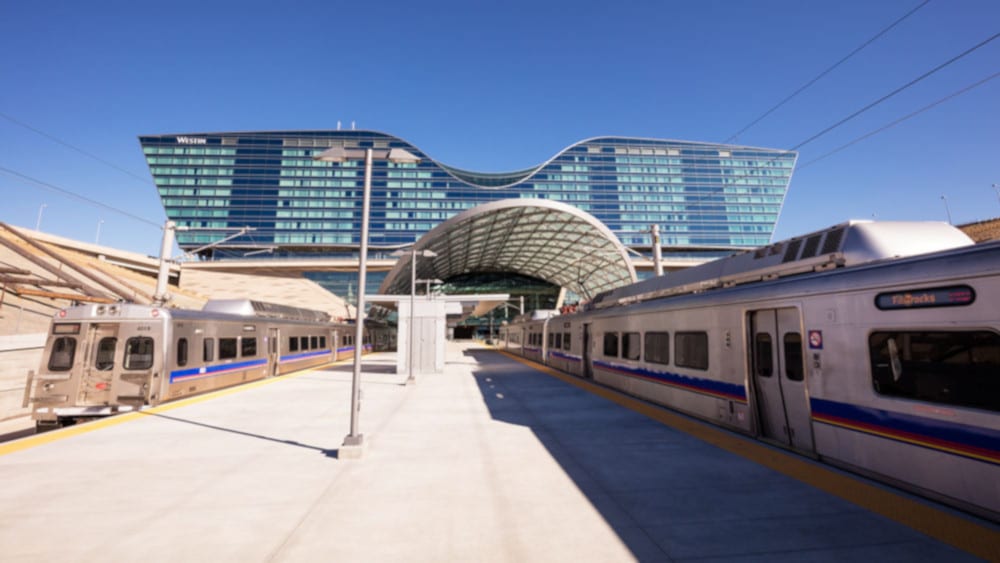
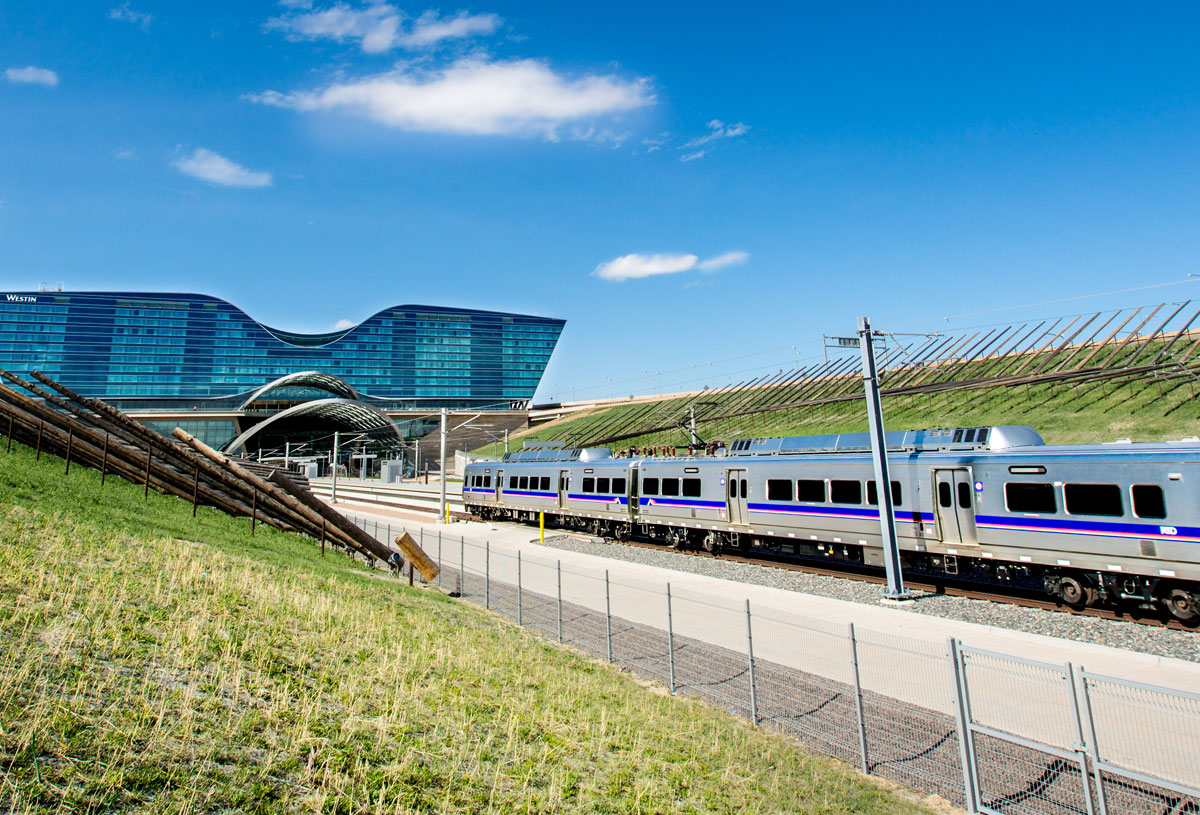
| Intermodal Rail-Air Terminals | Northeast and West Coast Corridors (e.g., EWR, OAK) | Direct integration with commuter rail or automated guideway transit systems, consolidated rental car centers | High multimodal connectivity; complex multi-agency coordination between transit authorities |
| Dedicated Air Cargo Mega-Hubs | Major Logistics Conduits (e.g., MEM, SDF, ANC) | Massive sorting facilities, ramp space tailored for widebody freighters, 24-hour unimpeded operations | Exceptional supply chain efficiency; minimal passenger processing infrastructure |
| General Aviation Reliever Fields | Metropolitan Peripheries (e.g., VNY, TEB) | Specialized corporate jet hangars, fixed-base operators, private customs processing | Relieves congestion at commercial hubs; narrow target demographic and restricted airline access |
Detailed Real-World Scenarios
The Mega-Hub Winter Weather Concourse Recovery
Following an unpredicted blizzards event at a major Midwest super-hub, airport operations teams coordinate with airline hub controllers to implement a phased de-icing and runway clearing schedule. The facility’s collaborative decision-making dashboard synchronizes gate reassignments, preventing tarmac gridlock while managing stranded passenger flow across terminal concourses.
The Constrained Urban Airport Capacity Management Project
Facing strict physical boundaries and neighborhood noise agreements, a constrained eastern seaboard gateway implements precision RNAV arrival procedures and an automated air traffic flow management system. This configuration increases hourly arrival rates during marginal weather without expanding the airport’s physical land footprint.
The Sprawling Western Hub Expansion and Train Integration
A rapidly growing desert mega-hub opens a new multi-gate satellite concourse linked to the central terminal via an automated underground transit loop. The engineering team coordinates power, baggage, and communication tunnels while maintaining continuous operation of surrounding active taxiways.
The Intermodal Rail-Air Transfer Streamlining Initiative
To reduce highway congestion connecting a major metropolitan airport to its surrounding region, port authority officials complete a direct automated people mover connection to regional commuter rail networks. The system incorporates remote airline check-in desks and bag drop services directly at the rail transit station.
Planning, Cost, and Resource Dynamics
The economic viability and capital budgeting of major domestic aviation facilities depend heavily on federal airport improvement grants, municipal bond issuances, airline user fees, and non-aeronautical revenue streams.
-
Capital Improvement Program Outlays: Constructing modern concourses, expanding baggage sorting capacity, and reinforcing pavement for next-generation widebody aircraft requires multi-billion-dollar long-term municipal bond financing.
-
Non-Aeronautical Revenue Generation: Maximizing concession sales, parking fees, and real-time advertising yields is critical to subsidizing landing fee structures for commercial air carriers.
-
Opportunity Costs: Failing to anticipate long-term regional passenger growth can lead to permanent slot constraints, airline capacity flight caps, and diminished regional economic competitiveness.
| Cost Dimension | Secondary Regional Airfield | Constrained Metropolitan Gateway | Primary International Super-Hub |
| Capital Infrastructure | Low initial pavement and basic terminal upkeep | High cost for vertical expansion and land acquisition | Massive multi-billion-dollar terminal and runway modernization programs |
| Landside Congestion Management | Minimal roadway and parking oversight | Intense traffic metering, congestion pricing, and intermodal rail coordination | Complex multi-level roadway systems, automated people movers, and remote parking lots |
| Airside Maintenance | Standard seasonal pavement resealing | High-frequency rubber removal and asphalt renewal under tight curfews | Continuous 24/7 runway lighting, de-icing pad management, and taxiway geometry updates |
Tools, Strategies, and Support Systems
Executing successful operational management across domestic aviation gateways requires integrating advanced digital planning, air traffic coordination, and security monitoring tools.
-
Collaborative Decision-Making (CDM) Dashboards: Real-time data sharing platforms synchronize flight arrival estimates, gate availability, and de-icing schedules between airlines, air traffic controllers, and airport operators.
-
Automated Airport Surface Detection Equipment (ASDE-X): Surface radar and multilateration systems track aircraft and vehicle movements across runways and taxiways to prevent surface collisions.
-
Dynamic Passenger Flow Analytics: Optical and Bluetooth sensor networks monitor queue lengths at security checkpoints and immigration halls, enabling real-time resource allocation and queue diversion.
-
Enterprise Asset Management (EAM) Software: Digital maintenance platforms track the operational health of baggage belts, escalators, jet bridges, and HVAC systems across sprawling terminal complexes.
-
Secure Digital Payment and Concession Gateways: Instant transaction processors support multi-currency terminal retail and dining operations.
-
Advanced Biometric Boarding Systems: Facial recognition technology streamlines international gate departures and customs clearance workflows without slowing passenger boarding velocity.
Risk Landscape and Failure Modes
Operating high-volume domestic aviation gateways introduces severe operational vulnerabilities that require comprehensive risk mitigation and emergency planning.
-
Cascading Weather Disruption Events: Severe thunderstorms or winter storms in key airspace sectors can cripple hub connecting banks, stranding thousands of passengers and overwhelming terminal holding capacity.
-
Air Traffic Control Staffing Shortages: Regional controller shortages can force ground delay programs and capacity restrictions, reducing airport operational throughput.
-
Baggage System Mechanical Failures: A primary sortation belt breakdown can halt luggage routing across multiple concourses, resulting in widespread misrouted bags and severe operational delays.
-
Perimeter Security and Access Breaches: Unauthorized vehicle or pedestrian entry onto airside ramps requires immediate facility lockdown and federal security investigations.
-
Cyberattacks on Critical Infrastructure: Malicious digital intrusions targeting flight information display systems or fuel distribution networks can paralyze airport operations.
Governance, Maintenance, and Long-Term Adaptation
Maintaining elite standards across national aviation gateway portfolios requires rigorous internal auditing, federal regulatory compliance, and disciplined capital scheduling.
-
Pre-Season Airfield and De-icing Audits: Comprehensive inspections of drainage systems, snow removal fleets, and chemical storage tanks occur prior to winter weather operations.
-
Monthly Throughput and Delay Metric Tracking: Detailed analysis of taxiway times, gate turnaround efficiency, and security wait intervals takes place continuously.
-
The Layered National Aviation Resilience Checklist:
-
Runway and Pavement Structural Audit: Test friction coefficients and load-bearing capacity to ensure safe operations for heavy widebody aircraft.
-
Airfield Lighting and Signage Verification: Confirm operational integrity of precision approach path indicators and taxiway centerline lights.
-
Emergency Power and Generator Testing: Execute load bank tests on backup generators supporting air traffic control, lighting, and terminal life-safety systems.
-
Federal Regulatory Compliance Review: Audit TSA security standards, FAA safety management systems, and environmental stormwater permits against federal mandates.
-
Measurement, Tracking, and Evaluation
-
Leading Indicators: Short average aircraft taxi-out times and high scores on passenger security throughput efficiency metrics serve as early operational signals.
-
Lagging Indicators: Total annual flight delay minutes, customer satisfaction survey indices, and baggage mishandling rates measure overall gateway success.
-
Documentation Standards: Maintaining an exhaustive digital archive tracks safety inspection logs, environmental compliance reports, and capital expenditure audits.
-
Benchmarking Analysis: Regularly comparing operational velocity and cost-per-enplaned-passenger metrics against competing national gateways ensures ongoing market optimization.
Common Misconceptions and Oversimplifications
-
“All major American airports operate with identical capacity and federal funding models.” True operations evaluated when analyzing american airport destinations usa require understanding complex municipal bond structures, airline lease agreements, and localized FAA airspace constraints.
-
“Airport delays are caused solely by airline scheduling errors.” National airspace congestion is frequently driven by constrained regional sector capacity, outdated air traffic control technology, and severe weather patterns.
-
“Building larger terminal buildings automatically solves passenger congestion.” Operational bottlenecks are more commonly tied to security checkpoint throughput, baggage sortation speed, and gate availability than square footage.
-
“Automated kiosks completely eliminate the need for ticketing counter staff.” Complex international documentation requirements and irregular flight disruptions require skilled human personnel to manage passenger exceptions.
-
“Airports rely entirely on public tax revenues for their capital improvements.” The vast majority of major U.S. airports operate as self-sustaining enterprise funds financed through user fees, airline rates, and revenue bonds.
-
“Property management software designed for standard real estate works seamlessly for massive airport terminals.” Dedicated enterprise asset management and collaborative decision-making tools are essential to coordinate multi-agency terminal operations.
Ethical, Practical, and Contextual Considerations
The operation of major commercial aviation gateways across the United States carries profound responsibilities regarding public safety, environmental stewardship, noise mitigation, and equitable economic access. Airport directors and municipal authorities must ensure that expansion projects minimize community noise impacts, reduce carbon emissions through sustainable building design, and comply fully with federal accessibility and civil rights mandates. Furthermore, coordinating emergency response protocols with federal security agencies ensures that national security and passenger safety take absolute precedence over commercial scheduling objectives.
Conclusion
The structural engineering, algorithmic management, and intermodal logistics of premier American aviation gateways represent a sophisticated national network synthesis. When airport authorities, airline planners, and municipal policy makers master the complexities governing american airport destinations usa, structured administrative methodologies achieve true long-term system resilience. Success in this specialized sector requires balancing high-volume passenger and cargo throughput with uncompromising safety compliance and robust data integration. Through patience and editorial rigor, stakeholders can protect critical infrastructure investments and guarantee enduring economic vitality across domestic transportation landscapes.