Best Private Transit Hotels in the US: Ultimate Editorial Guide
Evaluating ultra-exclusive short-stay accommodations and secluded resting hubs situated within major commercial aviation gateways across the United States reveals an intricate intersection of federal security mandates, tarmac logistics, and specialized real estate architecture. Federal Aviation Administration airspace rules, Transportation Security Administration screening protocols, municipal lease structures, and sophisticated asset management frameworks govern these specialized hospitality properties. Traditional travel coverage frequently reduces these high-security havens to simple airport hotel alternatives or generic VIP lounge roundups. However, private transit sanctuaries operating within secure airside perimeters or behind dedicated private terminal gates face rigorous operational constraints and severe regulatory hurdles. Federal screening oversight, secure-side tarmac transfer dependencies, and compressed micro-shift housekeeping turnaround schedules dictate daily asset oversight. Furthermore, private terminal operators, luxury hospitality directors, and institutional real estate investors continually refine operational models to balance rapid guest turnover against the financial and personal liabilities of travelers seeking absolute privacy, security, and uncompromised comfort.
Achieving structural stability and commercial resilience across secure airside sleep suites, standalone private terminals, and intermodal executive transit hubs requires navigating difficult trade-offs. Travelers and facility operators must manage severe flight delay compression alongside the liabilities of unexpected schedule cancellations, multi-modal transfer bottlenecks, and dynamic inventory pricing algorithms. Consequently, these operational choices tie safety stability directly to thoughtful reservation engineering and predictable emergency resource management. Moreover, analyzing domestic private transit accommodations sheds light on broader shifts in contemporary aviation hospitality and airport real estate economics. Therefore, this guide details the exact factors required when examining short-stay operational workflows and the underlying mechanics of identifying and evaluating the best private transit hotels in the us across diverse regional aviation zones.
Understanding best private transit hotels in the us

Evaluating specialized private hospitality models across North American airport jurisdictions involves complex classification terminology. Observers frequently conflate standard airport hotel properties or traditional first-class airline lounges with secure private transit suites governed under strict aviation infrastructure and security laws. However, this assumption obscures structural variances in local zoning restrictions, federal security clearance requirements, and hourly inventory distribution models. Micro-environments range from sound-mitigated airside sleep cabins embedded directly within terminal concourses to exclusive private VIP terminals featuring dedicated tarmac chauffeur transfers.
Developing or managing an exclusive booking system across a high-traffic American mega-hub requires navigating strict transportation security guidelines and airport authority lease agreements. Perimeter access restrictions and limited secure-side roadway lanes add further complexity. Conversely, operating an airside micro-suite involves heavy capital lease obligations, specialized acoustic engineering to block terminal noise, and variable check-in surges tied directly to major airline banking waves. Therefore, corporate travel managers and asset evaluators must inspect micro-level concourse access rules and inventory distribution channels closely.
True expertise in identifying the best private transit hotels in the us requires balancing quantitative inventory metrics against qualitative safety and guest privacy measures. Unlike continental commercial hotels relying on standard afternoon check-in windows, top-tier private transit nodes exist within dynamic, 24-hour operational loops. Experienced risk analysts and facility controllers look past standard daily occupancy percentages. Instead, they assess flight arrival volatility, hourly turnover velocity, and the actual contractual scope of multi-slot bookings. Ultimately, failing to master these operational realities leads directly to severe inventory leakage, guest displacement during mass flight cancellations, security bottlenecks, and unrecoverable liability exposure.
Deep Contextual Background
The historical evolution of American private transit lodging and secure layover risk management traces back to early mid-entieth-century executive aviation facilities and rudimentary airline VIP clubs during the propeller and early jet age. Post-war commercial aviation expansion and the establishment of hub-and-spoke routing models by legacy U.S. carriers shaped key national gateways such as Chicago O’Hare, Atlanta Hartsfield-Jackson, and New York JFK. During earlier eras, vernacular transit accommodations relied on manual ledger books and physical front desks. Basic terminal staff managed stranded passengers without sophisticated property management software or automated channel managers, leading to widespread operational miscalculations during major weather delays.
Following the late-twentieth-century deregulation of the airline industry and the subsequent introduction of computerized reservation systems, airport hospitality underwent a structural shift. Independent operators and high-security firms began blending traditional hotel administration models with real-time flight tracking interfaces while introducing flexible hourly booking windows to accommodate erratic airline schedules. In recent decades, the acceleration of air traffic congestion and high-net-worth demand for absolute privacy have driven unprecedented need for resilient security frameworks. Today, contemporary property managers rely on advanced predictive analytics and synchronized application programming interfaces to oversee high-turnover portfolios safely across changing flight schedules.
Conceptual Frameworks and Mental Models
Successfully administering short-stay private properties across major American aviation hubs while mitigating structural hazards requires deploying rigorous analytical models. These models balance flight schedule volatility against housekeeping turnover logistics and security perimeters.
-
The Hourly Inventory Velocity Index measures the statistical ratio of room turnover speed versus cleaning turnaround lag within a compressed operational window.
-
The Secure Concourse Access Friction Matrix evaluates how Transportation Security Administration screening checkpoints, private tarmac gates, and roadway congestion impact guest arrival predictability and transit compliance.
-
The Flight Delay Volatility Gradient analyzes the strategic trade-off between holding inventory for delayed inbound passengers versus releasing private rooms to walk-in traffic.
Key Categories and Variations
The landscape of architectural typologies and service models defining private transit accommodation management comprises several distinct structural variations across North American aviation jurisdictions.
| Private Transit Property Category | Primary Geographic Focus | Typical Structural & Operational Features | Strategic Trade-off |
| Standalone Private Terminal Suites | Major International Hubs (e.g., LAX, MIA, DFW, ATL) | Off-site or perimeter private buildings, dedicated TSA screening, BMW tarmac transfers | Ultimate privacy and security; extreme membership and per-use cost barriers |
| Airside Modular Sleep Suites | Domestic Hubs (e.g., ATL, JFK, DFW) | Secure-side concourse location, hourly booking, sound-mitigated daybeds | Immediate airside accessibility; compact square footage with limited private amenities |
| Aviation Executive Club Rooms | Northeast Corridor & Major Terminals | Secure lounge integration, private work pods, dedicated concierge staff | High productivity focus; shared communal restrooms and restricted overnight options |
| On-Airport Secure Perimeter Lodges | Regional and Secondary Gateways | Dedicated perimeter access gates, soundproof architecture, direct tarmac views | Strong aviation enthusiast appeal; heavy reliance on secure shuttle coordination |
| Intermodal Rail-Air Private Pods | Northeast Transport Corridors | High-speed rail integration, digital biometric access, hourly micro-stays | Seamless multi-modal transport; intense competition from urban boutique hotels |
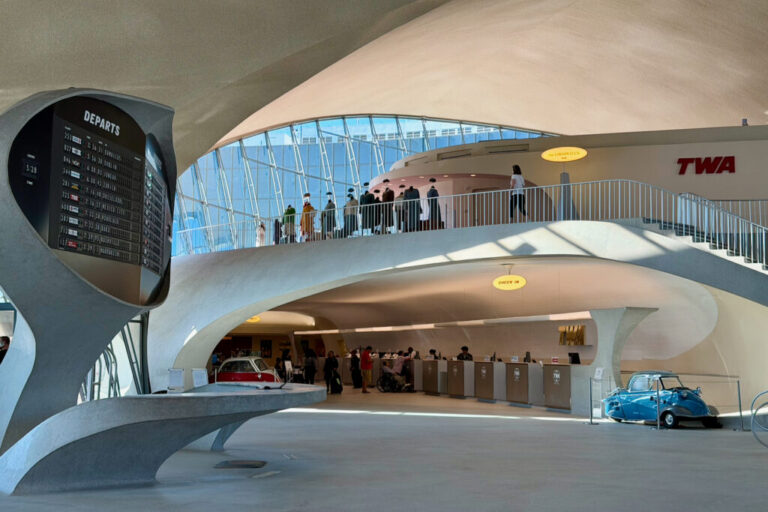
| Historic Terminal Conversion Suites | Landmark Aviation Hubs (e.g., JFK T4) | Restored vintage architecture, private lounge access, high-end dining | Exceptional historical branding; high capital maintenance costs |
Selecting an appropriate operational model requires aligning terminal architecture with passenger demographic expectations. For properties situated within secure airside footprints, prioritizing modular sleep cabins minimizes transit friction during short layovers. Conversely, for standalone private terminals requiring tarmac transfers, investing in robust fleet tracking software and dedicated security personnel ensures seamless transport from aircraft door to private suite.
Detailed Real-World Scenarios
The Transatlantic Executive Weather Ground Stop
Following an unexpected ground stop at a major international gateway, a standalone private terminal suite experiences an immediate surge in unannounced booking requests from high-profile commercial travelers. The property’s automated reservation engine dynamically adjusts inventory allocation, prioritizing members with confirmed onward boarding passes while coordinating secure tarmac transfers with airline operations desks.
The Airside Modular Suite Housekeeping Turnaround Compression
Facing a rapid succession of short-duration bookings during a massive domestic flight delay wave, an airside modular sleep suite facility optimizes its cleaning workflow. Management deploys modular linen replacement carts and staggered maintenance shifts, successfully reducing room turnaround times from fifteen minutes to five minutes while maintaining strict sanitation compliance.
The Perimeter Private Shuttle Fleet Synchronization Challenge
A secure perimeter transit lodge managing unpredictable late-night executive arrivals integrates its reservation management platform with live terminal flight tracking data. The system automatically dispatches secure transport vehicles based on actual aircraft touchdown times rather than scheduled arrival estimates, eliminating prolonged guest wait times and exposure to public terminal crowds.
The Dynamic Hourly Rate Optimization Project
To maximize yield during off-peak midday lulls between major domestic banking waves, an airside private suite provider implements variable hourly pricing tiers. This adjustment successfully captures regional business travelers seeking quiet workspace between local meetings without cannibalizing overnight premium rates or risking unverified occupancy.
Planning, Cost, and Resource Dynamics
The economic viability and risk mitigation budgeting of elite private transit accommodation facilities depend heavily on custom software integration and high-turnover labor outlays.
-
High-Security Labor Outlays: Managing continuous room turnover across twenty-four-hour operating cycles while maintaining dedicated private security personnel incurs substantial baseline labor expenditure compared to traditional hotel housekeeping.
-
Channel Distribution Commissions: Integrating with exclusive membership portals and private aviation booking networks demands significant technology licensing investment.
-
Opportunity Costs: Failing to account for rigid flight arrival waves and unexpected cancellation windows can erode operating margins and elevate security liability.
| Cost Dimension | Standard Airport Hotel | Airside Modular Sleep Suite | Standalone Private Terminal Suite |
| Logistical Overhead | Standard daily linen and cleaning schedule | Secure-side trash disposal and hourly linen cycles | Tarmac chauffeur coordination and private TSA staffing |
| Maintenance Risk | Low high-frequency hardware wear | Moderate room and door lock wear | Extreme fixture wear from high-velocity executive turnover |
| Technology Underwriting | Standard property management system | Hourly booking engine with real-time flight feeds | Encrypted member management and secure-side dispatch APIs |
Tools, Strategies, and Support Systems
Executing successful operational management across private transit hospitality properties requires integrating advanced digital planning and monitoring tools.
-
Real-Time Flight Tracking APIs: Live aviation feeds provide precise data on flight delays, gate changes, and early arrivals to update reservation holds automatically.
-
Dynamic Hourly Inventory Engines: Automated channel managers split standard nightly inventory into flexible micro-stay blocks without risking double bookings.
-
Self-Service Biometric Kiosks: Secure terminal touchscreens allow members to complete identity verification and room key encoding independently.
-
Automated Housekeeping Dispatch Software: Digital task management systems alert cleaning staff immediately upon room checkout, tracking turnaround times in real time.
-
Secure Digital Payment Gateways: Instant transaction processors support multi-currency micro-billing and corporate membership account invoicing.
-
Encrypted Access Control Systems: Smartphone-enabled digital room keys eliminate physical keycard management logistics for short-stay travelers.
Risk Landscape and Failure Modes
Operating high-velocity private transit properties introduces severe operational vulnerabilities that require comprehensive risk mitigation.
-
Systemic Overbooking During Mass Delays: Unprecedented flight cancellations can overwhelm reservation buffers, leading to severe guest displacement and brand damage.
-
Housekeeping Bottlenecks: Sudden simultaneous checkouts across an entire facility can cause severe cleaning delays, halting incoming reservation turnovers.
-
Integration Failures with Airline Feeds: Loss of real-time flight status data can desynchronize arrival estimates, resulting in unassigned holding rooms or abandoned reservations.
-
High Fixture Depreciation: Accelerated guest turnover increases wear and tear on custom furniture, premium electronics, and locking mechanisms, requiring frequent capital maintenance.
-
Security Perimeter Violations: Mismanagement of guest routing can result in unauthorized security breaches across sterile concourse or tarmac checkpoints.
Governance, Maintenance, and Long-Term Adaptation
Maintaining elite standards across high-turnover private transit property portfolios requires rigorous internal auditing and scheduling.
-
Pre-Shift Operational Audits: Comprehensive inspections of digital key encoders, kiosk hardware, and linen inventories occur prior to major airline banking arrivals.
-
Weekly Turnover Velocity Tracking: Detailed analysis of cleaning turnaround times and room status transition speed takes place continuously.
-
The Layered Private Transit Resilience Checklist:
-
Flight Data Feed Verification: Test API connections with live aviation tracking servers to ensure uninterrupted delay notifications.
-
Kiosk and Hardware Diagnostics: Conduct diagnostic checks on self-service check-in terminals and digital lock controllers.
-
Emergency Inventory Reserve Allocation: Maintain a protected percentage of unassigned micro-stay slots for stranded VIP or medical transit cases.
-
Regulatory Compliance Review: Audit security access logs and terminal lease compliance terms against aviation authority mandates.
-
Measurement, Tracking, and Evaluation
-
Leading Indicators: Low average room turnaround duration and high real-time channel synchronization accuracy serve as early operational signals.
-
Lagging Indicators: Total monthly inventory leakage rates and guest satisfaction metrics regarding privacy and check-in speed measure overall asset success.
-
Documentation Standards: Maintaining an exhaustive digital archive tracks maintenance logs, cleaning turnaround times, and channel distribution yields.
-
Benchmarking Analysis: Regularly comparing micro-stay occupancy velocity against competing terminal properties ensures ongoing optimization.
Common Misconceptions and Oversimplifications
-
“Private transit hotel reservations operate identically to standard overnight hotel bookings.” True operations evaluated when examining the best private transit hotels in the us require hourly inventory slicing and real-time flight integration.
-
“Airport modular suites face minimal housekeeping challenges.” High-velocity micro-stay turnover demands continuous, round-the-clock cleaning schedules far exceeding traditional hotel models.
-
“Flight delays always result in lost revenue for private transit lodges.” Well-managed properties capture stranded passenger surges dynamically through flexible hourly rate tiers.
-
“Self-service check-in kiosks completely eliminate the need for on-site staff.” Automated systems require skilled support personnel to assist passengers navigating complex terminal rules.
-
“Private transit hotels rely solely on walk-in traffic from delayed passengers.” Modern properties capture significant advance bookings from high-net-worth business travelers and executive flyers.
-
“Property management software designed for standard hotels works seamlessly for private transit properties.” Dedicated short-stay algorithms are essential to prevent inventory fragmentation and double-booking errors.
Ethical, Practical, and Contextual Considerations
The operation of elite private transit accommodation assets across the United States carries profound responsibilities regarding passenger welfare, absolute privacy, and secure terminal integration. Property managers must ensure that guest management protocols prioritize safety, accessibility, and transparent pricing during stressful travel disruptions. Furthermore, coordinating emergency accommodation procedures with airport authorities ensures that public safety and passenger comfort take absolute precedence over commercial yield optimization.
Conclusion
The algorithmic management, operational compliance, and inventory logistics of premier private transit accommodation properties represent a sophisticated synthesis. When property operators and travelers master the complexities governing the best private transit hotels in the us, structured administrative methodologies achieve true long-term resilience. Success in this specialized sector requires balancing high-velocity room turnover with robust aviation data integration. Through patience and editorial rigor, stakeholders can protect capital investments and guarantee enduring service quality across domestic transit landscapes.