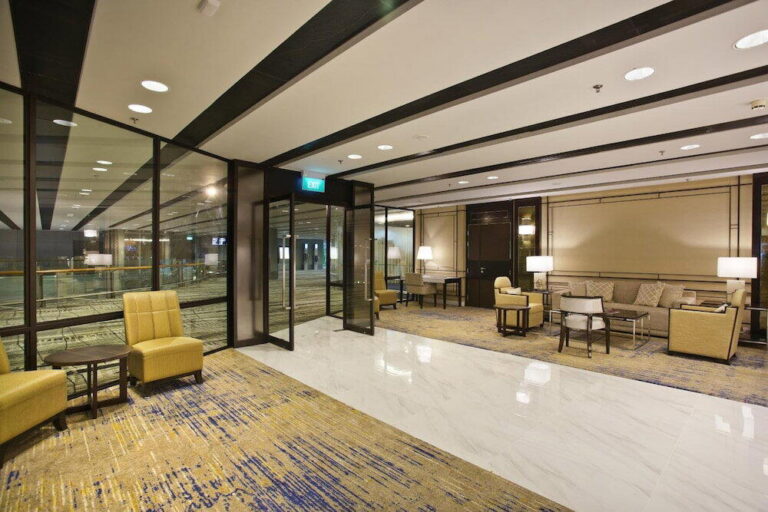
Top Transit Hotels Packages: Strategy, Costs, and Layovers
The architecture of global mobility depends entirely on the stability of its connecting nodes. When transcontinental itineraries span multiple time zones, layovers shift from minor inconveniences into critical operational variables. Within international travel management, identifying and deploying the correct short-term accommodations requires sophisticated evaluation frameworks. Yet, choosing where to rest during an intermediate flight connection is rarely treated with the rigorous analysis it demands, often resulting in systemic friction and unexpected expenses.
Standard travel planning frequently reduces transit accommodation to a simple nightly rate search on consumer booking aggregators. This surface-level approach ignores the complex operational realities of airport ecosystems, including dynamic pricing surges, immigration restrictions, ground transport bottlenecks, and varying terminal architectures. True optimization requires a comprehensive evaluation of how physical placement, access rights, and fractional-stay durations interact with corporate policies or individual itineraries.
This analysis examines the multi-layered mechanics governing temporary lodging selections during air journeys. By dismantling the structural forces that inflate costs, categorizing property types by their operational utility, and establishing robust governance frameworks, this guide provides a definitive reference for achieving sustainable travel efficiency without compromising schedule reliability or personal well-being.
Understanding “top transit hotels packages”
Navigating the landscape requires abandoning the traditional mindset applied to downtown resort or business hospitality. At its core, the evaluation of top transit hotels packages encompasses far more than a simple nightly rate check near a runway; it defines the strategic assessment of bundled offerings—such as day-use access, meal credits, ground transfers, and expedited check-in privileges—that minimize total transit time, eliminate regulatory friction, and protect the traveler from operational volatility. Misunderstandings typically arise when planners evaluate airport lodging through a consumer lens, focusing purely on aesthetic amenities rather than spatial-temporal efficiency.
Oversimplification remains the greatest hazard for travel coordinators. Assuming that any hotel package within a three-mile radius of an airport serves the same function invites severe logistical failure. A budget motel requiring a complex highway taxi transfer, a late-night border clearance process, and an early morning return commute introduces multiple points of failure. Conversely, an integrated airside micro-hotel or a terminal-connected property bundling inclusive meals and fast-track transit benefits transforms an exhausting layover into a seamless operational pause.
A sophisticated perspective treats lodging evaluation as an exercise in supply chain risk management. The optimal choice balances room cost against ground transport expenses, visa requirements, productivity capability, and the probability of flight disruption. By framing accommodations around total operational impact rather than isolated room charges, organizations and independent travelers establish resilient transit protocols.
Deep Contextual Background
The evolution of airport-adjacent lodging mirrors the rapid structural transformation of international commercial aviation over the past seventy years. As long-haul aircraft capabilities expanded and hub-and-spoke networks consolidated traffic through major international gateways, airports transformed from simple refueling stops into massive economic nodes. The sheer volume of connecting passengers generated an acute demand for secure, proximate rest facilities, prompting the initial development of basic airline dormitories and terminal-adjacent motels.
Over subsequent decades, airline deregulation and the proliferation of low-cost carriers fractured traditional routing models. The exponential rise of self-connecting itineraries—where passengers stitch together separate point-to-point tickets rather than utilizing single interline contracts—exposed millions of travelers to overnight layovers without the safety net of airline-provided accommodation vouchers. This systemic shift fueled the rapid commercialization of specialized transit real estate, giving rise to everything from hyper-dense airside sleep pods to sprawling multi-national branded airport complexes offering comprehensive bundling solutions.
Simultaneously, real estate constraints within airport perimeters created a distinct economic microclimate. Land immediately adjacent to active runways is strictly limited by zoning regulations, height restrictions, and environmental noise ordinances. Consequently, supply is permanently capped while demand fluctuates wildly in response to weather disruptions, air traffic control congestion, and seasonal migration patterns. Property owners exploit this inelasticity through dynamic pricing algorithms. Understanding this historical and economic backdrop is essential for evaluating lodging options objectively, explaining why standard discount methodologies frequently collapse in airport environments.
Conceptual Frameworks and Mental Models
Evaluating transit lodging choices effectively demands structured analytical frameworks. Relying on systematic mental models prevents decision-makers from reacting impulsively to volatile rate quotes or superficial marketing claims.
1. The Spatial-Temporal Decay Curve
This model illustrates that the true value of a transit hotel decays exponentially as its physical distance from the departure gate increases, weighed against the diminishing cost savings of cheaper perimeter properties. While a hotel situated ten miles away might feature a lower base room rate, the temporal and financial costs of ground transportation, traffic vulnerability, and delayed rest create an inversion point where the nominal savings are entirely erased.
2. Total Cost of Layovers (TCL) Framework
Adapted from supply chain total cost of ownership principles, the TCL framework aggregates base room rates, local taxes, ground transportation, lost productivity hours, meal allowances, and potential visa acquisition fees. By calculating TCL rather than focusing on headline nightly rates, planners frequently discover that premium on-site terminal properties are ultimately more cost-effective than remote budget alternatives.
3. Asymmetric Risk Valuation
Transit scheduling operates within a probabilistic environment. This mental model weighs the financial savings of booking a non-refundable, discounted transit hotel against the likelihood of inbound flight delays. If an operational disruption renders a prepaid room unusable, the initial savings disappear, resulting in a total financial loss and heightened stress for the traveler.
4. Fractional Occupancy Arbitrage
Recognizing that many transit windows do not require full 24-hour stays, this framework evaluates the utility of micro-stays, day-use rooms, and airside sleep cabins. By paying strictly for the hours consumed (such as a six-hour block between midnight and dawn), itineraries eliminate the financial waste of paying for vacant daytime hours.
Limits of these frameworks: These models assume rational behavior and predictable operating environments. During severe weather crises or systemic airline meltdowns, spatial-temporal logic breaks down as airport inventory vanishes entirely, rendering optimization models secondary to immediate availability.
Key Categories and Structural Variations
Transit accommodations comprise a diverse spectrum of property types, each defined by distinct structural attributes, access requirements, and operational trade-offs.
-
Airside Terminal Pods & Micro-Hotels: Located deep within secure transit areas, requiring no immigration or customs clearance. Trade-offs: Absolute proximity and zero transport time, balanced by compact square footage, limited amenities, and premium pricing per hour.
-
Integrated Landside Hub Hotels: Physically connected to terminal buildings via enclosed pedestrian walkways, skybridges, or automated transit systems. Trade-offs: Seamless foot access and high schedule reliability, paired with top-tier dynamic pricing premiums.
-
Perimeter Shuttle Hotels: Located within a narrow 2-to-5-mile radius, serviced by dedicated or shared hotel shuttle loops. Trade-offs: Moderate room rates and standard spatial comfort, offset by transit time vulnerabilities and irregular shuttle schedules during off-peak hours.
-
Off-Site Commercial Properties: Standard business or budget hotels located in nearby commercial districts or towns. Trade-offs: Maximum cost-efficiency and loyalty point-earning potential, requiring mandatory taxi or rideshare expenses and landside border clearance.
-
Rail-Connected Suburban Hotels: Properties situated further from the airport perimeter but directly linked via high-speed airport express rail networks. Trade-offs: Highly predictable travel times bypassing road congestion, offset by fixed rail ticket costs and walking distances within stations.
-
Airline Stopover and Carrier-Subsidized Programs: Hotel packages arranged or subsidized directly by international flag carriers for extended hub connections. Trade-offs: Exceptional value or complimentary stays, bounded by strict fare-class eligibility rules and limited booking flexibility.
-
Intermodal Station Lodging: Accommodations integrated into multi-modal transit hubs where high-speed rail meets airport link lines. Trade-offs: Often priced below airport perimeter rates, though frequently necessitating complex multi-modal luggage transfers.
Comparative Evaluation of Transit Accommodation Categories
| Category | Typical Price Tier | Transport Cost | Immigration Required? | Productivity Potential | Reliability Index |
| Airside Pods | High | Zero | No | Low (Workspace constrained) | Very High |
| Integrated Landside | Premium | Zero to Minimal | Yes | High | Very High |
| Perimeter Shuttle | Moderate | Low (Shuttle inclusive) | Yes | Moderate | Moderate |
| Off-Site Commercial | Low to Moderate | High (Taxis/Rides) | Yes | High | Low-Moderate |
| Rail-Connected | Moderate | Fixed (Rail fare) | Yes | Moderate | High |
| Carrier Programs | Subsidized/Free | Included | Varies | Moderate | High |
Realistic Decision Logic for Property Selection
When determining which category to deploy, decision-makers should follow a disciplined triage protocol:
-
Verify Border Access Rights: If the traveler lacks the requisite transit visa or citizenship for country entry, airside pods or airside transit lounges represent the mandatory default, regardless of cost.
-
Evaluate Layover Duration: For layovers under eight hours, airside micro-hotels or airport lounge day-rooms eliminate terminal navigation friction. For layovers exceeding fourteen hours, off-site commercial properties or carrier stopover programs provide mental health benefits through spatial separation from the airport environment.
-
Assess Schedule Volatility: High-risk connections during storm-prone seasons favor integrated landside properties to minimize missed-connection exposure.
Detailed Real-World Scenarios
Analyzing how these structural categories function in practice clarifies the operational stakes involved in lodging decisions.
Scenario A: The Corporate Logistics Coordinator
An industrial manufacturing firm regularly routes engineering teams between North America and Southeast Asia via a major Middle Eastern mega-hub. Layovers average eleven hours overnight. Initially, the travel desk booked the cheapest 3-star hotels located fifteen miles outside the city center to minimize room ledger expenses.
-
Constraints: Tight project deadlines; teams arrive exhausted; local traffic congestion is unpredictable.
-
Decision Points: The travel desk discovered that taxi fares, mandatory visa-on-arrival fees, and lost morning productivity due to extended commutes outweighed the room savings by 35%.
-
Failure Modes: On two occasions, morning traffic jams caused engineers to miss their connecting flights, resulting in thousands of dollars in rebooking penalties.
-
Second-Order Effects: Shifting the corporate policy to integrate landside hub hotel access increased direct room costs by 15%, but eliminated ground transport fees, reduced missed connections to zero, and improved team performance upon arrival.
Scenario B: The Solo Academic Researcher
A university researcher traveling on a restricted grant must navigate a self-connected itinerary through a congested European gateway with a fourteen-hour overnight layover.
-
Constraints: Strict grant accounting rules; requirement to justify every expenditure; modest per diem limits.
-
Decision Points: Opting for an off-site budget hotel accessible via regional rail rather than an expensive airport hotel.
-
Failure Modes: The researcher underestimated the complexity of the rail transfer late at night, resulting in an expensive midnight taxi ride when trains stopped running.
-
Second-Order Effects: While the room cost met grant guidelines, the incidental transport spike breached the approved travel budget, highlighting the necessity of evaluating night-transport schedules alongside hotel rates.
Scenario C: The Freight Logistics Crew
An international cargo carrier manages rolling schedules for flight deck crews needing mandatory rest periods during trans-oceanic repositioning.
-
Constraints: Strict regulatory rest requirements; zero tolerance for sleep disruption.
-
Decision Points: Utilizing dedicated airline crew hotels with twenty-four-hour check-in guarantees and quiet-zone compliance embedded in master service agreements.
-
Failure Modes: Using dynamic consumer booking platforms led to instances where rooms were unready upon crew arrival due to hotel overbooking, directly threatening legal rest compliance.
-
Second-Order Effects: Establishing guaranteed inventory agreements ensured crew well-being and regulatory compliance, proving that reliability supersedes spot-rate discounting in commercial aviation operations.
Planning, Cost, and Resource Dynamics
Financial efficiency in transit accommodation requires a rigorous accounting of both direct and indirect resource allocation. Organizations failing to map these variables frequently experience cost bleed.
Direct Costs
-
Base room rate and local occupancy taxes.
-
Resort or mandatory facility fees charged by properties.
-
Direct booking platform service charges or corporate agency management fees.
Indirect and Opportunity Costs
-
Ground transportation (taxis, rideshares, parking, airport rail passes).
-
Incidental subsistence (meals not covered by per diems due to poor hotel dining options).
-
Productivity loss resulting from poor sleep quality or lack of high-speed workspace connectivity.
-
Regulatory friction costs (visas, exit taxes, baggage transfer fees when landside clearance is forced).
Variable Cost Ranges Across Planning Frameworks
| Cost Component | Low-Cost Strategy | Optimized Mid-Tier Strategy | Premium Integrated Strategy |
| Room Night (USD) | $60 – $90 | $120 – $180 | $250 – $400+ |
| Ground Transport (USD) | $40 – $80 (Taxis/Rides) | $15 – $30 (Rail/Shuttle) | $0 (Walking connection) |
| Visa/Clearance (USD) | $30 – $100 (If required) | $0 – $50 | $0 (Airside access) |
| Total Estimated Footprint | $130 – $270 | $135 – $260 | $250 – $400+ |
Analysis of Variability: Notice how low-cost base room rates are frequently neutralized by secondary transport and clearance expenses, demonstrating that sound planning depends on structural positioning rather than chasing the lowest headline room rate.
Tools, Strategies, and Support Systems
Deploying the right operational tools and structural agreements is essential for maintaining control over transit lodging expenditure and traveler safety.
-
Corporate Travel Management (CTM) Platforms: Modern booking engines configured with automated policy guardrails to direct users toward preferred lodging options based on layover length.
-
Master Service Agreements (MSAs): Direct contracts with hotel ownership groups near key hub airports to lock in fixed corporate rates insulated from surge pricing.
-
Day-Use Booking Platforms: Specialized software tools designed to reserve fractional time blocks, avoiding full overnight rate charges.
-
Disruption Management APIs: Real-time flight tracking tools integrated with travel desks to automatically trigger room modifications before cancellation windows close.
-
Airline Carrier Programs: Formal integration of carrier-provided transit hotel packages into corporate travel policies for long layovers.
-
Virtual Payment Solutions: Single-use virtual cards that streamline payment processes and restrict unauthorized incidental spend.
-
Consortium Networks: Leveraging global travel management networks to gain preferred access, rate discounts, and late-cancellation privileges.
Limits of Support Systems: Automated tools rely on clean data inputs. If flight schedules update chaotically or booking metadata is mislabeled, algorithms can miscalculate optimal lodging options, requiring human editorial oversight.
Risk Landscape and Failure Modes
Every travel strategy introduces specific risk exposures. Understanding these failure modes prevents catastrophic cost overruns and operational failures during travel disruptions.
-
The Non-Refundable Trap: Securing ultra-low rates via prepaid, non-refundable booking channels creates massive exposure during airline delays. If an inbound flight is delayed by six hours, a short layover evaporates, turning a prepaid hotel room into a wasted expenditure.
-
Visa and Immigration Traps: Booking cheap landside hotels without verifying transit visa requirements can result in travelers being denied boarding or detained at immigration checkpoints, generating severe emergency expenses and legal liabilities.
-
Inventory Exhaustion during Hub Disruptions: Major storms or air traffic control strikes cause immediate spikes in demand for airport-adjacent hotels. Organizations relying on last-minute spot booking find themselves priced out or locked out entirely.
-
Quality and Safety Deficits in Deep-Perimeter Budget Properties: Chasing low room rates can lead travelers into substandard properties lacking basic security infrastructure, fire safety compliance, or reliable sanitation, exposing organizations to duty-of-care liabilities.
-
Compounding Latency Risks: Relying on distant off-site hotels introduces multiple points of failure—missed hotel shuttles, road accidents, and regional transit strikes—that multiply the probability of missing subsequent flights.
Governance, Maintenance, and Long-Term Adaptation
Achieving structural efficiency in transit accommodation requires ongoing governance rather than a static policy document. Organizations must institute structured review cycles to ensure travel policies evolve alongside aviation industry shifts.
Monitoring and Review Cycles
-
Monthly Exception Audits: Review all last-minute hotel bookings, cancellation fees, and disruption expenses to identify recurring friction points or rogue booking behavior.
-
Quarterly Rate Benchmarking: Compare corporate contracted rates against prevailing market indices across top ten global transit hubs to ensure preferred properties remain competitive.
-
Annual Policy Calibration: Adjust layover duration thresholds (e.g., raising the mandatory hotel booking threshold from six hours to eight hours based on empirical fatigue data).
Layered Governance Checklist
-
[ ] Verify that all transit booking channels enforce total cost calculation rather than base-rate sorting.
-
[ ] Ensure preferred hotel properties maintain active safety and security compliance certifications.
-
[ ] Audit virtual credit card usage to confirm zero unauthorized incidental billing.
-
[ ] Review airline partner agreements to confirm voucher recovery parameters during weather disruptions.
-
[ ] Conduct quarterly traveler feedback surveys to assess sleep quality, commute friction, and productivity impacts.
Measurement, Tracking, and Evaluation
Evaluating the performance of selected transit lodging strategies requires balancing quantitative performance indicators with qualitative feedback from travelers.
Leading Indicators
-
Percentage of transit stays booked via preferred corporate channels versus open-market consumer sites.
-
Adherence rate to total cost of layover guidelines by business units.
-
Pre-trip booking lead times (tracking the reduction of expensive last-minute reservations).
Lagging Indicators
-
Total annual transit accommodation expenditure per employee mobility hour.
-
Frequency of missed connections due to transit lodging miscalculation.
-
Volume of expense report exceptions and policy waiver requests.
Qualitative Signals
-
Traveler reported fatigue levels and subjective readiness upon reaching final destinations.
-
Feedback regarding property cleanliness, safety, and workspace functionality.
Documentation Examples
Effective tracking requires maintaining standardized internal reporting logs:
-
Disruption Recovery Log: Captures date, flight number, assigned hotel, total cost, and whether costs were recovered from airlines or insurance.
-
Preferred Property Performance Tracker: Records nightly rates, complaint frequencies, and SLA compliance for contracted transit hotels.
-
Total Cost Variance Report: Compares projected layover budgets against actual expenditures, broken down by direct room costs, transport, and incidentals.
Common Misconceptions and Oversimplifications
Misguided assumptions frequently undermine efforts to execute efficient transit lodging strategies. Addressing these myths is vital for maintaining organizational policy discipline.
-
Myth 1: “The cheapest nightly rate always yields the lowest cost.”
-
Correction: Base room rates ignore ground transport, visa fees, and productivity drains. Total cost of layovers often proves that moderately priced airside properties are cheaper overall.
-
-
Myth 2: “Airport hotels are identical to standard urban business hotels.”
-
Correction: Transit properties operate under distinct demand cycles, captive pricing power, and specialized check-in patterns designed for rolling flight arrivals.
-
-
Myth 3: “Travelers should always book non-refundable rates to maximize savings.”
-
Correction: In aviation, schedule volatility is a certainty. Non-refundable bookings remove operational flexibility, turning minor flight delays into total financial losses.
-
-
Myth 4: “Airline-provided vouchers cover all required layovers.”
-
Correction: Airlines are rarely obligated to provide accommodation for self-connected itineraries, weather delays deemed ‘acts of God,’ or layovers falling below statutory time thresholds.
-
-
Myth 5: “Day-use micro-hotels are a gimmick with no real business value.”
-
Correction: For daytime layovers between connecting banks, micro-hotels eliminate the waste of paying for overnight stays while preserving traveler rest and productivity.
-
-
Myth 6: “Loyalty point accumulation justifies booking higher-priced off-site properties.”
-
Correction: Prioritizing individual employee loyalty point accumulation over corporate total cost optimization frequently inflates organizational travel expenditures.
-
Ethical, Practical, and Contextual Considerations
Cost reduction in corporate and institutional travel must never cross the threshold of compromising human safety or well-being. Sleep deprivation among traveling personnel correlates directly with impaired decision-making, elevated health risks, and operational errors. When planning short-stay accommodations and evaluating inclusive bundles, organizations hold a strict duty of care to ensure that selected properties meet rigorous standards of physical security, fire safety, environmental hygiene, and nutritional access.
Furthermore, environmental considerations increasingly intersect with transit logistics. Selecting poorly positioned off-site hotels that require extensive combustion-engine vehicle transport generates unnecessary carbon emissions compared to utilizing pedestrian-accessible airside or integrated terminal facilities. True operational maturity balances fiscal stewardship with ethical responsibility, recognizing that sustainable cost reduction is achieved through systemic architectural efficiency rather than the exploitation of vulnerable travelers or compromised safety margins.
Conclusion
Managing transit accommodation expenditure is an exercise in complex operational navigation. Surface-level interventions, such as chasing headline discounts or defaulting to distant perimeter motels, inevitably introduce hidden liabilities that inflate total costs. By adopting robust conceptual frameworks, evaluating the total cost of layovers rather than base room rates, implementing structured master service agreements, and maintaining rigorous governance oversight, organizations and independent travelers can achieve lasting financial efficiency. Sustainable mastery over transit lodging expenses resides at the intersection of spatial awareness, risk management, and disciplined administrative execution.